
About Us
The argument in favor of using filler text goes something like this: If you use real content in the Consulting Process, anytime you reach a review point you’ll end up reviewing and negotiating the content itself and not the design.
Gallery


Social Account

Premium vs Mass Transit Routes: Which Advertising Strategy Delivers Better ROI?
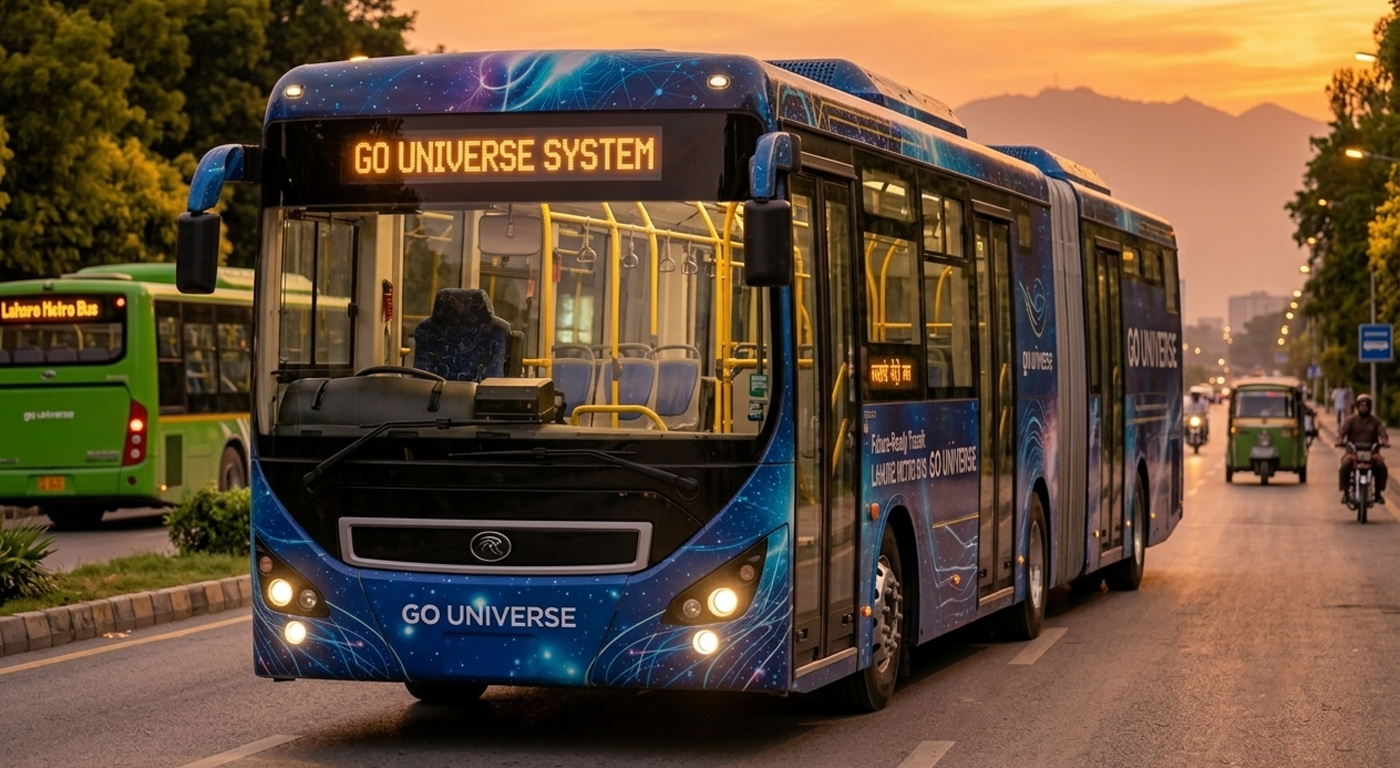
Many transit advertising campaigns fail because brands focus on the number of vehicles rather than the routes those vehicles travel.
More buses, cabs, or transit vehicles do not automatically guarantee better results. In reality, a single vehicle operating on the right route can generate more impact than an entire fleet traveling through low-value locations.
The success of a transit advertising campaign depends largely on route selection. Choosing between premium and mass transit routes can significantly influence audience reach, brand perception, and overall return on investment.
So, which option delivers better results?
Understanding Premium Transit Routes
Premium transit routes are travel corridors that pass through high-value commercial and business districts.
These routes often include:
- Airport roads
- Financial centers
- Corporate parks
- Technology hubs
- Luxury shopping districts
- Business districts
Premium routes may not always have the highest traffic volume, but they attract audiences with stronger purchasing power and greater decision-making influence.
For industries such as real estate, finance, luxury retail, automotive, and premium education, these routes can deliver highly relevant exposure.
Benefits of Premium Transit Routes
Reach High-Value Audiences
Premium routes allow brands to connect with professionals, business leaders, investors, and affluent consumers.
Enhance Brand Positioning
Advertising in prestigious locations strengthens brand perception and credibility.
Improve Audience Relevance
Rather than reaching everyone, premium routes help brands reach the people most likely to become customers.
Build Long-Term Recall
Frequent exposure to the same audience along daily business routes helps improve brand recognition over time.
What Are Mass Transit Routes?
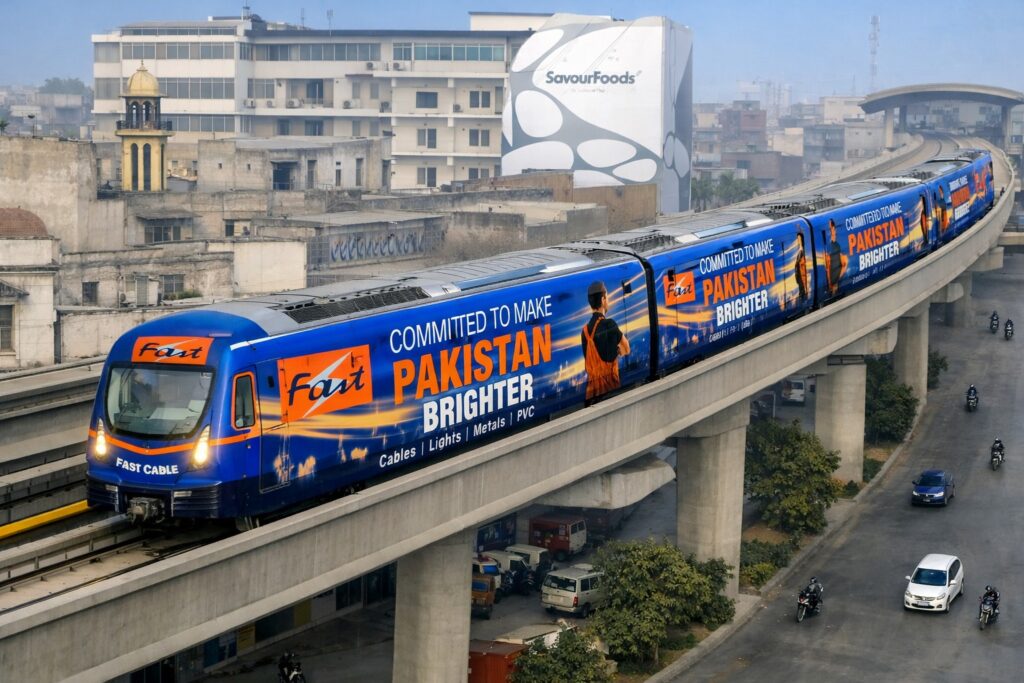
Mass transit routes focus on maximum audience reach and high daily exposure.
These routes typically include:
- Major city roads
- Metro feeder routes
- Railway station corridors
- Commercial markets
- Bus routes
- Residential zones
Mass routes are designed to reach large volumes of people across different demographics throughout the day.
For businesses seeking widespread visibility, these routes can generate substantial brand exposure at a relatively cost-effective rate.
Benefits of Mass Transit Routes
Greater Audience Reach
Mass routes expose your brand to thousands of commuters, shoppers, and travelers every day.
Strong Brand Awareness
Repeated exposure across busy corridors helps build familiarity and recognition.
Cost-Effective Visibility
Brands can achieve broad market coverage without the higher costs often associated with premium locations.
Ideal for Consumer Brands
Mass routes work particularly well for FMCG products, food delivery services, retail chains, telecom companies, and consumer-focused businesses.
Premium vs Mass Routes: Key Differences
| Premium Routes | Mass Routes |
|---|---|
| Focus on audience quality | Focus on audience quantity |
| Stronger brand positioning | Higher overall reach |
| Premium consumer targeting | Mass-market exposure |
| Higher advertising costs | More budget-friendly |
| Ideal for niche audiences | Ideal for broad awareness |
Both route types serve different marketing objectives, making the right choice dependent on campaign goals.
Which Route Delivers Better Results?
For Brand Awareness Campaigns
Mass transit routes are often the better option.
If your objective is to reach the largest possible audience and maximize visibility, high-traffic routes provide broader exposure and stronger recall.
For Premium Products and Services
Premium routes usually deliver superior results.
Luxury brands, financial services, real estate developers, and high-value businesses benefit from reaching more targeted and affluent audiences.
For Local and Hyperlocal Campaigns
Location-specific campaigns perform best when transit routes align closely with the target market.
Businesses such as restaurants, retail stores, healthcare providers, and local services can achieve stronger results through carefully selected local transit routes.
How to Create an Effective Transit Advertising Strategy
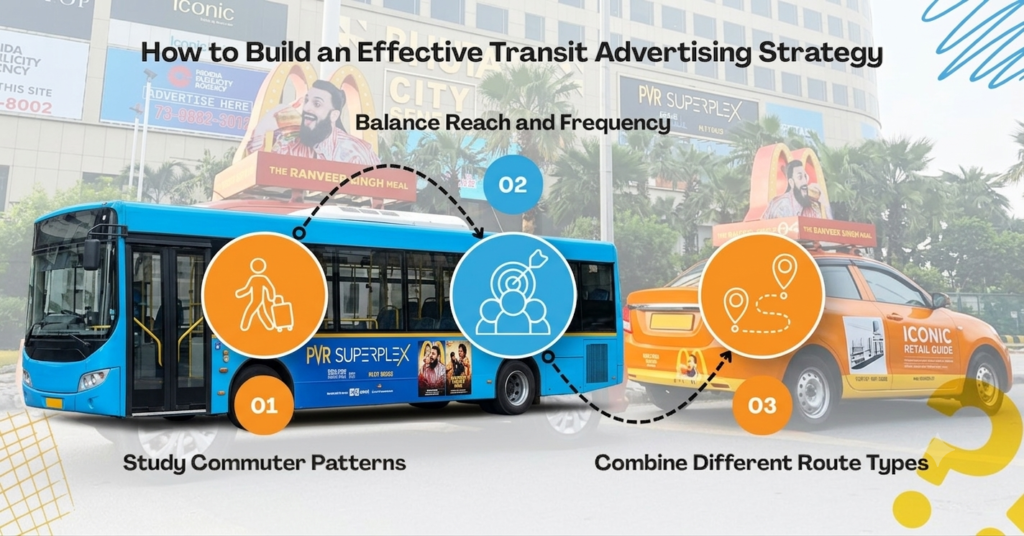
Define Your Campaign Objectives
Start by identifying whether your goal is:
- Brand awareness
- Lead generation
- Local engagement
- Product promotion
- Brand positioning
Your objective should guide every route selection decision.
Analyze Audience Movement
Study traffic patterns, commuter behavior, office districts, residential zones, and commercial centers.
Understanding how people move throughout a city helps identify the most effective advertising routes.
Balance Reach and Frequency
Successful transit campaigns focus on both audience size and repeated exposure.
Consistent visibility often delivers stronger results than simply maximizing reach.
Combine Multiple Route Types
Many of the most successful campaigns use a mix of premium and mass routes.
Premium routes build credibility and audience quality, while mass routes generate large-scale awareness and recall.
This balanced approach often delivers the strongest overall return on investment.
Common Mistakes Brands Make
Many advertisers reduce campaign performance by:
- Choosing routes based only on traffic volume
- Ignoring audience demographics
- Treating all city areas equally
- Overlooking peak commuting periods
- Using identical messaging across all routes
The most effective transit campaigns are built around audience behavior, not simply vehicle numbers.
Conclusion
There is no universal winner between premium and mass transit routes.
Premium routes excel at reaching high-value audiences and strengthening brand perception. Mass routes, on the other hand, deliver large-scale awareness and broad market reach.
The best strategy depends on your campaign objectives, target audience, and marketing goals.
For many brands, combining both route types creates the ideal balance between visibility, audience quality, and advertising ROI.
When transit advertising is planned strategically, route selection becomes one of the most powerful tools for driving campaign success.
Frequently Asked Questions
Are premium transit routes more expensive?
Yes. Premium routes typically cost more because they provide access to highly valuable audiences and prestigious locations.
Do mass transit routes always perform better?
Not necessarily. While they offer greater reach, premium routes often provide stronger audience targeting and brand relevance.
Which industries benefit most from premium routes?
Industries such as real estate, finance, luxury retail, automotive, education, and technology often achieve better results through premium route advertising.
Why is route planning important in transit advertising?
Route selection directly impacts audience quality, visibility, recall, and overall campaign performance. In many cases, the route matters more than the number of vehicles used.